
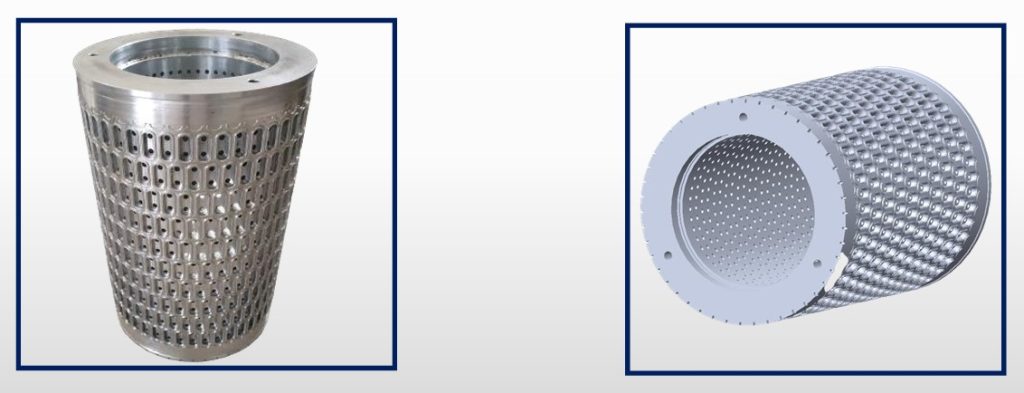
Soft Gelatin Capsule Die – Product Information
The product shown in your image is called a Soft Gelatin Capsule Die, also known as a Softgel Die Roll. It is a specialized precision-engineered tooling component used in pharmaceutical manufacturing to produce soft gelatin capsules.
According to the information in your image, this die was developed for Globe Pharmaceuticals. The image also states that similar dies were previously imported from abroad and that local manufacturing reduced production costs by approximately 60%. These claims are based on the image and have not been independently verified.
Product Information
- Product Name: Soft Gelatin Capsule Die
- Product Category: Pharmaceutical Tooling / Precision-Machined Component
- Industry: Pharmaceutical and Nutraceutical Manufacturing
- Product Type: Custom-engineered cylindrical die roll
- Primary Function: Forming, sealing, and cutting softgel capsules in rotary die encapsulation machines.
Softgel capsules are commonly used for products such as fish oil, omega-3, vitamin E, and various pharmaceutical preparations containing suitable liquid or suspension-based formulations.
How Does a Soft Gelatin Capsule Die Work?
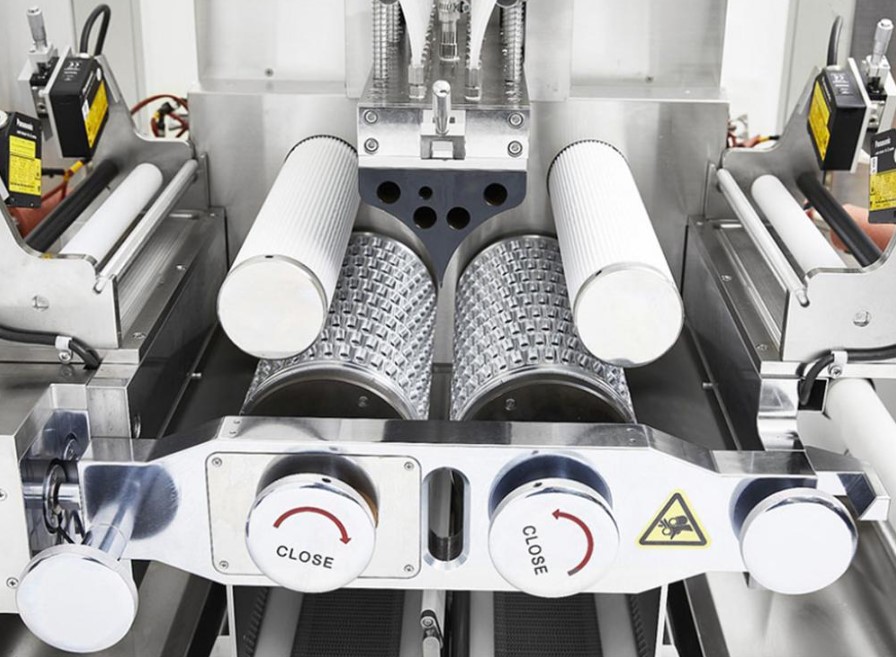
The die is typically used in a rotary die encapsulation machine. Two matching die rolls rotate in opposite directions to form capsules from gelatin ribbons.
- Gelatin Ribbon Formation: Two flexible gelatin sheets are prepared for the encapsulation process.
- Filling Material Injection: A measured quantity of the filling material is introduced between the gelatin ribbons.
- Capsule Forming: Precision-machined cavities on the die rolls determine the shape and size of each capsule.
- Sealing and Cutting: The die rolls press the gelatin ribbons together to seal and separate individual capsules.
- Drying and Quality Inspection: The finished capsules undergo controlled drying and quality checks before further processing.
The precision of the die cavities, sealing profiles, and alignment of the matching rolls is critical to capsule quality and consistent production.
Technical Specifications
The following is a preliminary product specification. Actual values must be confirmed using the original engineering drawings, machine specifications, or physical samples.
| Specification | Description |
| Product Name | Soft Gelatin Capsule Die / Die Roll |
| Industry | Pharmaceutical |
| Product Type | Precision-engineered tooling |
| Main Function | Capsule forming, sealing, and cutting |
| Basic Geometry | Cylindrical roll with precision-machined cavities |
| Material | Suitable tool steel or stainless steel, subject to design requirements |
| Manufacturing Processes | CNC turning, CNC milling, precision grinding, and cavity machining |
| Surface Finish | Controlled according to application requirements |
| Quality Inspection | Dimensional accuracy, cavity profile, surface finish, runout, and matching of die pairs |
Important: The exact material grade, hardness, dimensions, tolerances, and cavity specifications cannot be confirmed from the image alone.
Manufacturing Processes and Required Machinery
Producing a softgel die requires specialized machining capabilities and strict dimensional control. Depending on the design, the manufacturing process may include:
- CNC Turning Centre: For machining the external diameter, internal bore, and cylindrical surfaces.
- CNC Milling or Precision Engraving: For producing the capsule cavities and other detailed profiles.
- Precision Grinding: For achieving the required dimensions and surface finish.
- Heat Treatment: Where required to achieve the specified material hardness and wear resistance.
- CMM or Optical Measurement: For inspecting critical dimensions and complex cavity geometry.
- Surface Finishing: For achieving the required surface quality and functional characteristics.
Not every die requires all these processes. The final manufacturing route depends on the die design, material, machine requirements, and quality standards.
Potential Customers and Market Opportunities
Softgel dies are specialized tooling components that may offer opportunities in the pharmaceutical manufacturing supply chain.
Potential customer categories include:
- Pharmaceutical companies manufacturing softgel capsules.
- Nutraceutical and vitamin supplement manufacturers.
- Pharmaceutical machinery and tooling suppliers.
- Replacement-parts suppliers serving softgel production facilities.
- Engineering companies specializing in pharmaceutical machine components.
Local production may offer advantages such as shorter lead times, easier communication, customized tooling, and reduced dependence on imported components, provided the product meets the required technical and quality standards.
The 60% Cost Reduction Claim
Your image states that local production costs are approximately 60% lower than overseas alternatives.
This could be a strong selling point, but before using it in marketing materials, compare the local production cost with the complete landed cost of an equivalent imported die, including shipping, customs duties, taxes, and other import-related expenses. Product specifications, service life, and quality should also be comparable.
Recommendations for MAAK Traders
If MAAK Traders manufactures this product or has the capability to manufacture it, it could represent an opportunity to enter a specialized, higher-value segment of precision metal engineering.
One important clarification: Did MAAK Traders manufacture this Soft Gelatin Capsule Die in its own workshop, or is the image being used as an example of a project completed for Globe Pharmaceuticals? This distinction will help determine how best to present the product in your company’s portfolio.