
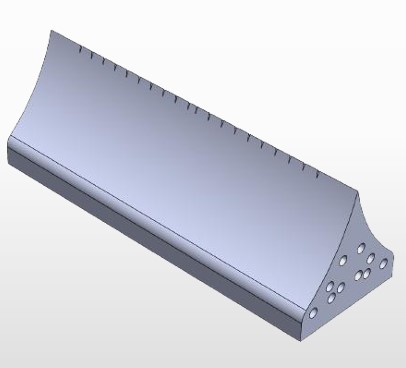
Advancing Pharmaceutical Manufacturing Through Precision Engineering: Double Step Die Roll Bottom Type Injection Segment
The pharmaceutical industry depends on precision-engineered machinery and specialized components to maintain consistent production, reliable performance, and high-quality output. As pharmaceutical manufacturing continues to advance, the demand for customized metal components and locally manufactured industrial tooling is increasing.
One example is the Double Step Die Roll Bottom Type Injection Segment, a specialized component identified in the featured project associated with Globe Pharmaceuticals. This component represents the importance of precision machining, custom engineering, and cost-effective local manufacturing in supporting pharmaceutical production.
What Is a Double Step Die Roll Bottom Type Injection Segment?
The Double Step Die Roll Bottom Type Injection Segment is a specialized, precision-engineered metal component designed for a particular machine configuration and production application. Its stepped geometry, machined surfaces, and multiple precision holes indicate that dimensional accuracy and compatibility with the corresponding assembly are important design considerations.
Components of this nature must be manufactured according to approved engineering drawings, material requirements, dimensional tolerances, and machine specifications. Proper manufacturing and inspection help ensure that the finished component meets its intended functional requirements.
Why Precision Components Matter in Pharmaceutical Manufacturing
Pharmaceutical production equipment requires reliable components that can perform consistently under defined operating conditions. The quality of individual machine parts can influence equipment performance, maintenance requirements, and production efficiency.
Key considerations include:
1. Dimensional Accuracy
Precision machining helps ensure that critical dimensions, hole positions, mounting surfaces, and component interfaces meet the specified tolerances.
2. Reliable Performance
Proper material selection, machining quality, and dimensional inspection help components perform according to their intended design requirements.
3. Consistent Manufacturing Quality
A controlled manufacturing process supports repeatability and helps reduce dimensional variation between components.
4. Maintenance and Replacement Support
Local manufacturing capabilities can help pharmaceutical manufacturers obtain customized replacement components with potentially shorter lead times than overseas sourcing, subject to technical approval and production capacity.
Local Manufacturing: A Cost-Effective Alternative to Imports
Specialized pharmaceutical machinery components have traditionally presented sourcing challenges when suitable local manufacturing options are unavailable. Importing such components may involve international shipping, customs procedures, longer delivery schedules, and additional procurement costs.
Developing precision components locally can provide several advantages:
- Reduced dependence on imported machine components.
- Potential savings in manufacturing and procurement costs.
- Improved communication during design development and customization.
- Greater flexibility when producing components to approved drawings.
- Potentially shorter lead times for replacement parts and repeat orders.
For the featured Double Step Die Roll Bottom Type Injection Segment project, the supplied project information reports a production cost approximately 60% lower than overseas alternatives. This figure highlights the potential commercial value of local engineering, although actual savings depend on equivalent specifications, quality requirements, tooling costs, and the full landed cost of imported alternatives.
Our Approach to Precision Metal Engineering
At MAAK Traders, we recognize the importance of quality, dimensional accuracy, and customer-specific requirements in industrial component manufacturing.
Our approach focuses on understanding technical drawings, selecting suitable manufacturing processes, maintaining dimensional control, and delivering metal components according to agreed specifications.
For specialized applications in the pharmaceutical sector, engineering validation and appropriate quality checks are essential. Material traceability, surface-finish requirements, and compatibility with the intended equipment should be established according to the customer’s technical and quality requirements.
Supporting the Future of Pharmaceutical Manufacturing in Bangladesh
Building local capabilities for precision-engineered components can support the growth of Bangladesh’s pharmaceutical manufacturing ecosystem. Local engineering and manufacturing partnerships may help reduce sourcing challenges, improve responsiveness, and create opportunities for more specialized industrial production.
Projects such as the Double Step Die Roll Bottom Type Injection Segment demonstrate the potential of combining engineering expertise with cost-conscious manufacturing to meet specific industrial requirements.
As demand for customized machinery components grows, collaboration between pharmaceutical manufacturers and capable local engineering suppliers can contribute to a more responsive and competitive supply chain.
Contact us: 01815918007 Email: maaktraders26@gmail.com
Conclusion
The Double Step Die Roll Bottom Type Injection Segment illustrates the value of precision engineering in specialized pharmaceutical machinery applications. Through appropriate material selection, accurate machining, rigorous inspection, and customer-focused manufacturing, locally produced components can offer a practical alternative to imported products.
MAAK Traders is committed to supporting industrial customers with quality-focused metal components and customized manufacturing solutions designed around their technical requirements.
Looking for customized metal components for pharmaceutical or industrial applications? Contact MAAK Traders to discuss your drawings, samples, and manufacturing requirements.